
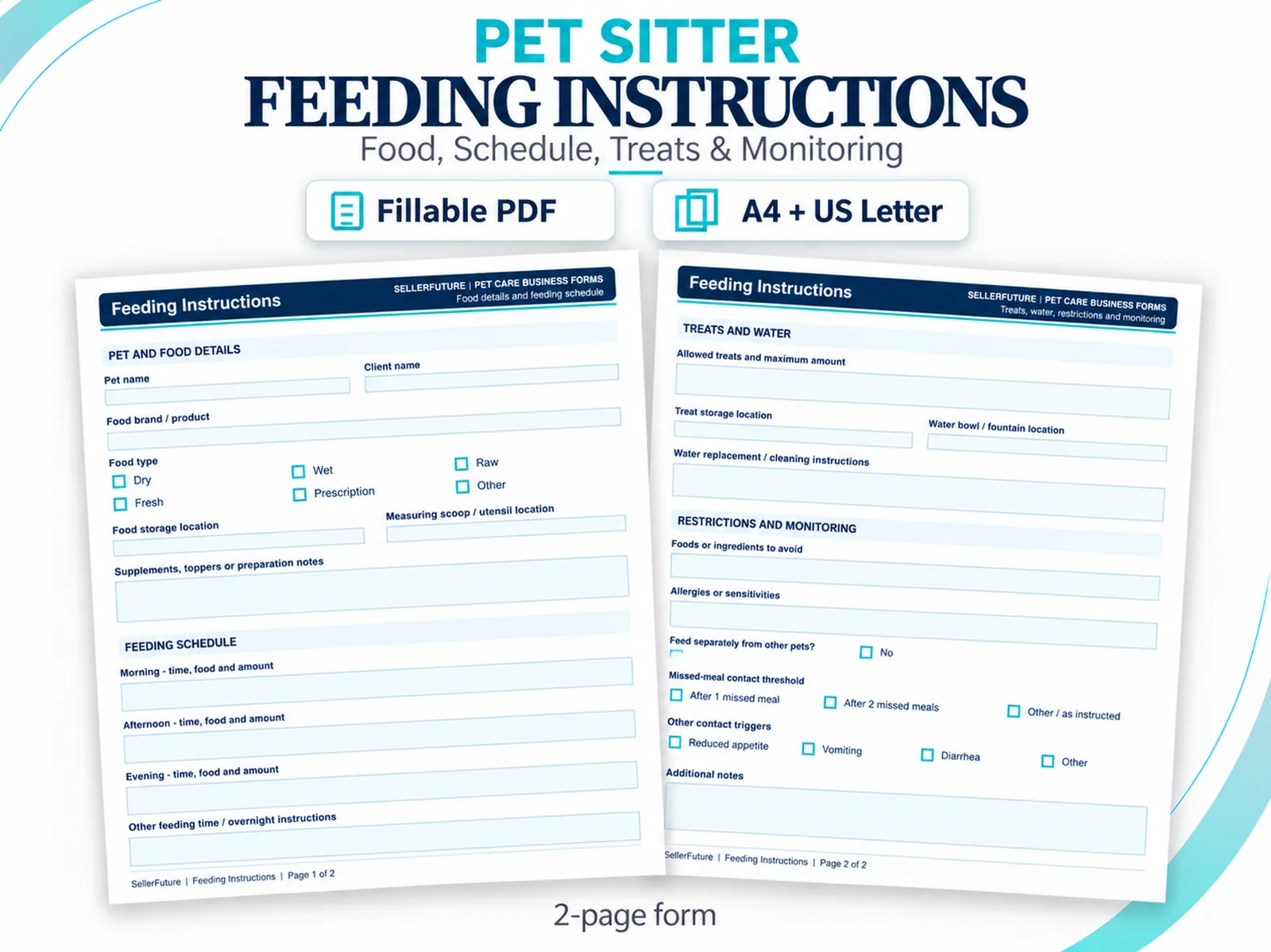
Need the actual feeding record for the next client?
Use the 2-page fillable form for food details, schedule, treats, water, restrictions and monitoring.
Care instructions become harder to use when every detail is stored in one giant intake form or scattered across text messages. A stronger system separates standing pet information, feeding routine, medication directions and booking-specific changes so the sitter can find the right current record at the moment of care.
1. Separate record types before collecting more fields
Use a pet profile for standing identity, behavior, handling and health/safety context. Use a feeding record for food, meal timing, treats, water and monitoring. Use a medication record for client/veterinary directions. Keep temporary changes dated and attached to the affected booking or care period.
2. Keep the pet profile stable enough to be useful
Record identifying details, behavior and triggers, daily routine, outdoor permissions, handling context, mobility or health notes and other standing care information. Review it when the client reports a material change.
3. Make feeding instructions measurable
Use explicit food product, amount, timing, storage and preparation instructions instead of phrases such as “normal amount.” Record treats, water routine, ingredients to avoid and client-provided contact triggers for missed meals or changes in appetite.
4. Record medication directions exactly as supplied
Keep medication name, dose as provided, route/method, timing, date range, food context, storage and missed/refused-dose instructions together. Do not improvise changes or convert an administrative record into medical judgment.
5. Do not overwrite standing instructions with a temporary change
If a client changes a meal or medication routine for one booking, date the temporary instruction and make its active period obvious. After the booking, the standing record should not remain accidentally altered.
6. Build a pre-service verification habit
Before care begins, verify the current pet profile, active feeding instructions, active medication instructions and booking-specific exceptions. The objective is a short reliable handoff, not a larger form library.
Turn the decision into a working next step.
This article provides business-management education. Legal, tax, accounting, veterinary, insurance and regulatory requirements vary by jurisdiction and situation; verify current requirements with appropriate sources or qualified professionals.
Continue with
Pet Sitting Client Onboarding Workflow: From Inquiry to First-Booking Ready
A practical pet-sitting onboarding workflow covering qualification, meet-and-greet verification, current records, access and first-booking readiness.
PET SITTING BUSINESS FORMSPet Sitting Business Forms: What a Professional Client & Service Pack Should Cover
A guide to pet sitting business forms: client intake, pet records, care instructions, bookings, visits, incidents, payments and schedules.