
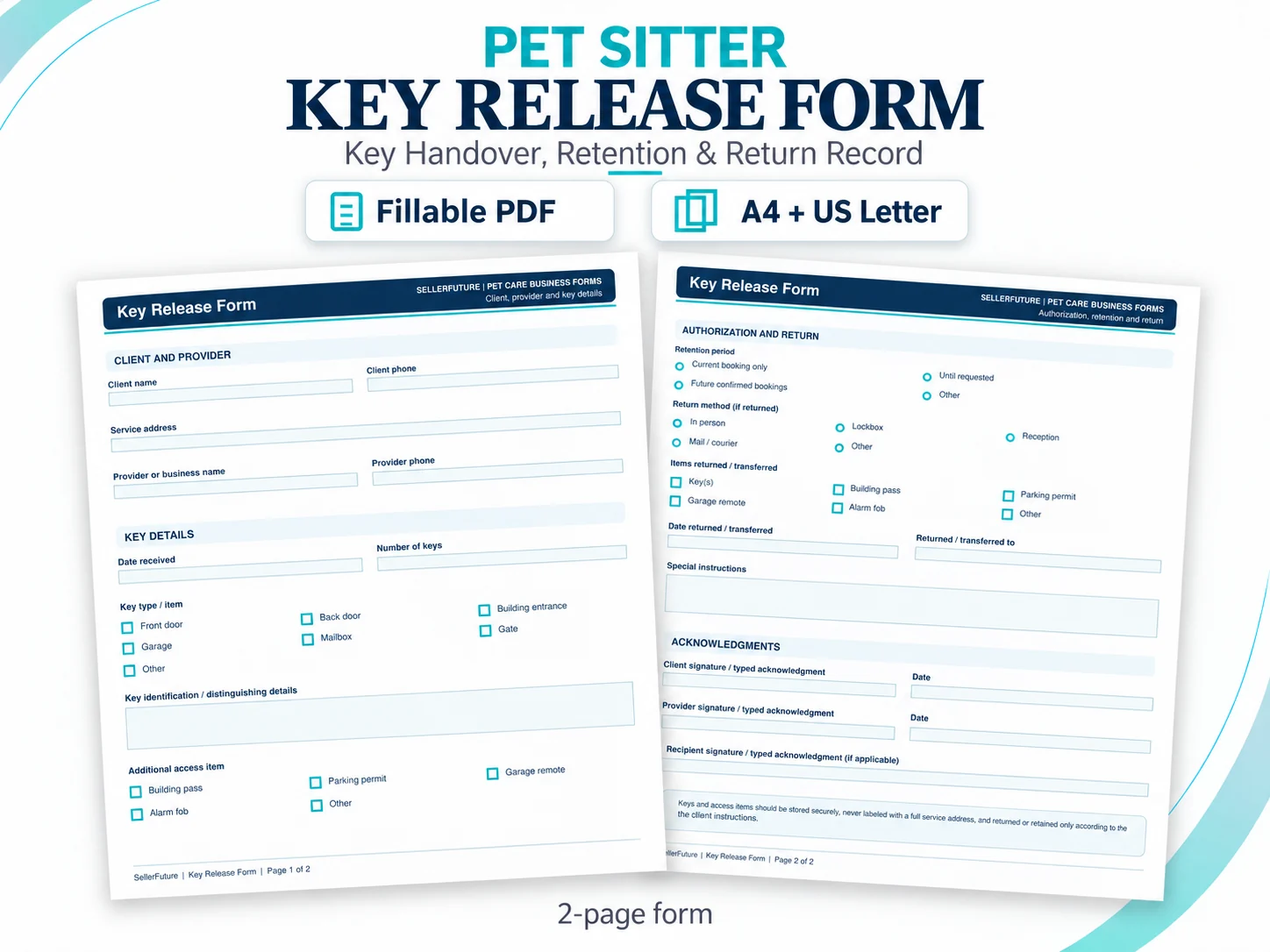
Need a controlled key handover record?
Use the fillable key release form to document receipt, retention, return, access items and acknowledgments.
Key handling is easy to manage informally when a business has two customers and one provider. The risk grows when recurring bookings, multiple access items, retained keys, backups or team handoffs make it unclear who holds what and when it should be returned.
1. Record the handover when it happens
Capture the client, provider/business, service address context, date received, number of keys and any additional access items. Avoid creating unnecessary security exposure just to make the form more detailed.
2. Use controlled identification
A key record should help the business distinguish the item without labeling the physical key with sensitive information such as a full service address. Choose an internal method appropriate to the business and its security practices.
3. Separate custody from casual availability
Define where keys or access items are stored, who is authorized to use them and what happens during staff or backup-provider handoffs. The goal is controlled custody, not convenience at any cost.
4. Make retention explicit
Some clients may want a key retained for future confirmed bookings; others may expect immediate return. Record the agreed retention period or trigger so an old key does not remain in storage simply because nobody remembered to return it.
5. Close the loop on return or transfer
Record return method, items returned, date, recipient and acknowledgment where appropriate. If an item is transferred to another authorized provider, keep the transfer visible rather than treating it as an invisible handoff.
6. Review access when the relationship changes
Client relocation, changed locks, ended services, lost items or a new provider can all trigger review. Keep the key record aligned with the current service relationship and the client’s instructions.
Turn the decision into a working next step.
This article provides business-management education. Legal, tax, accounting, veterinary, insurance and regulatory requirements vary by jurisdiction and situation; verify current requirements with appropriate sources or qualified professionals.
Continue with
Pet Sitting Client Onboarding Workflow: From Inquiry to First-Booking Ready
A practical pet-sitting onboarding workflow covering qualification, meet-and-greet verification, current records, access and first-booking readiness.
PET SITTING BUSINESS FORMSPet Sitting Business Forms: What a Professional Client & Service Pack Should Cover
A guide to pet sitting business forms: client intake, pet records, care instructions, bookings, visits, incidents, payments and schedules.