
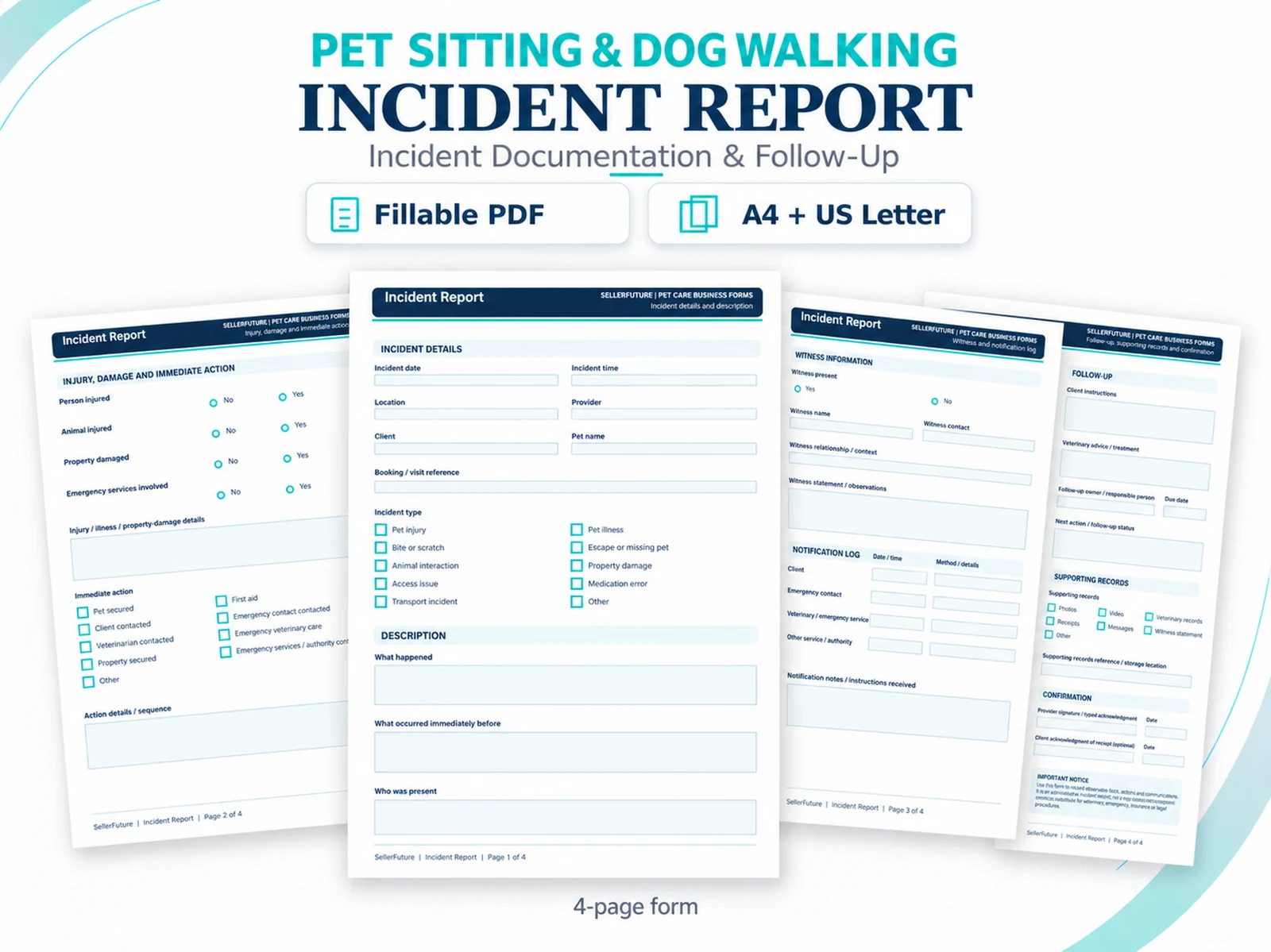
Need a factual incident record ready before something goes wrong?
Use the 4-page fillable report for event details, immediate action, witnesses, notifications, follow-up and supporting records.
An incident record is most useful when it is factual, timely and separate from speculation. The purpose is to preserve what happened, what was done, who was notified and what follow-up remains—not to decide legal liability on the form.
1. Emergency action comes before documentation
If a person or animal needs urgent help, prioritize the appropriate emergency, veterinary or authority response. The form can be completed after immediate safety needs are addressed.
2. Record observable facts and time anchors
Capture date, time, location, provider, client, pet, booking/visit reference, incident type, what happened, what occurred immediately before and who was present. Distinguish what you observed from what someone later reported.
3. Document immediate actions
Record actions such as securing the pet, contacting the client, seeking veterinary care or protecting property where applicable. Include the sequence and relevant times rather than relying on memory at the end of the day.
4. Record witness context appropriately
If witnesses were present, record the contact/context needed for follow-up while respecting privacy requirements. Do not rewrite a witness statement to make it fit a preferred narrative.
5. Keep a notification log
Record who was contacted, when, how and what instructions or next steps were received. This can include the client, emergency contact, veterinary service or another relevant party depending on the event.
6. Preserve supporting records
Reference photos, video, receipts, veterinary records or other evidence without embedding sensitive information unnecessarily. Keep records secure and follow applicable retention, insurance and reporting requirements.
7. Turn the incident into an owned follow-up
Assign the next action, responsible person, due date and status. Separately review whether the incident exposes a process issue in intake, access, handling, equipment, route planning, communication or service boundaries.
Turn the decision into a working next step.
This article provides business-management education. Legal, tax, accounting, veterinary, insurance and regulatory requirements vary by jurisdiction and situation; verify current requirements with appropriate sources or qualified professionals.
Continue with
Pet Sitting Business Forms: What a Professional Client & Service Pack Should Cover
A guide to pet sitting business forms: client intake, pet records, care instructions, bookings, visits, incidents, payments and schedules.
DOG WALKING BUSINESS FORMSDog Walking Business Forms: Intake, Instructions, Visits, Incidents & Admin Records
Dog walking forms framework for client intake, pet information, walking instructions, access, visit records, incidents, invoices and weekly scheduling.